
Letter 5
IX for the girls

Dear Reader,
Watch any girls’ elementary or middle-school team and you will likely get your money’s worth of jump-ball calls.
The idea that a player can grab the basketball that is in front of them, a basketball someone else is holding, and grasp it with muscle and grit until the official blows the whistle to stop the game, is a common scene.
Usually you can spot a determined look, a flex of a few muscles, a shoulder jerking in a powerful pull. Sometimes there’s a vicious look from a spritely pony-tailed girl who just a few hours earlier cooed over a baby animal video. The athlete becomes empowered and believes that they have the right to have the ball too. It’s a beautiful thing to witness, really.
Title IX was passed just over 50 years ago and perhaps no other legislation (except for the Supreme Court decision that was reversed last summer) has had a bigger impact on females in the U.S.
The law’s intention was to provide a more equal educational experience for women.
While women certainly gained on men in the classroom, with now the clear majority of students being women in higher education, the result happening almost indirectly trickled down to young girls by way of sports.
This experience happened differently for many girls depending on geographic location, socioeconomic status, parental involvement, as well as skin color and sexual orientation or identification. And, if I could insert a scholarly caveat here - Title IX, like most other federal programs, has at times ignored women of color, transgender people or others who are often overlooked and not held to the same nondiscriminatory standards as white women. I am unable to tell their story on a personal level. So the story I have to tell you is one from me, a white, cisgender female.
A few years after Title IX was passed fathers of daughters, without any access to feminist critical theory, opened up the wide world of sports to their baby girls. They might have even given them a football for their first Christmas.

For me, I was a toddler when my dad taught me how to throw and catch a ball in our front yard. That was just how he spent his evenings after work – throwing us pop flies or balls to hit into the yard. We sometimes loaded up for basketball games in mystical places like Van-Far and Montgomery City. He explained baseball’s rules and football penalties and basketball strategies. And I asked a lot of questions. Sports were part of what we did as we lived out in the country away from neighbors. But it was also how we connected to my dad.
One of my clear childhood memories was the 1982 NCAA Championship game in which North Carolina beat Georgetown in a tight game. This was a significant one for many who watched it because players like James Worthy, Michael Jordan and Patrick Ewing (both freshman) were on the court that night.
What I remember, though, is that I was allowed to stay up for the game and my 7-year-old heart was broken. I was rooting for Georgetown and John Thompson and Patrick Ewing. When Fred Brown mistakenly passed the ball to James Worthy of North Carolina in their last possession. I was inconsolable. My dad tucked me in saying tomorrow would be a new day and that people make mistakes, even really good basketball players. It was just one of many life-lesson sports conversations we have had.
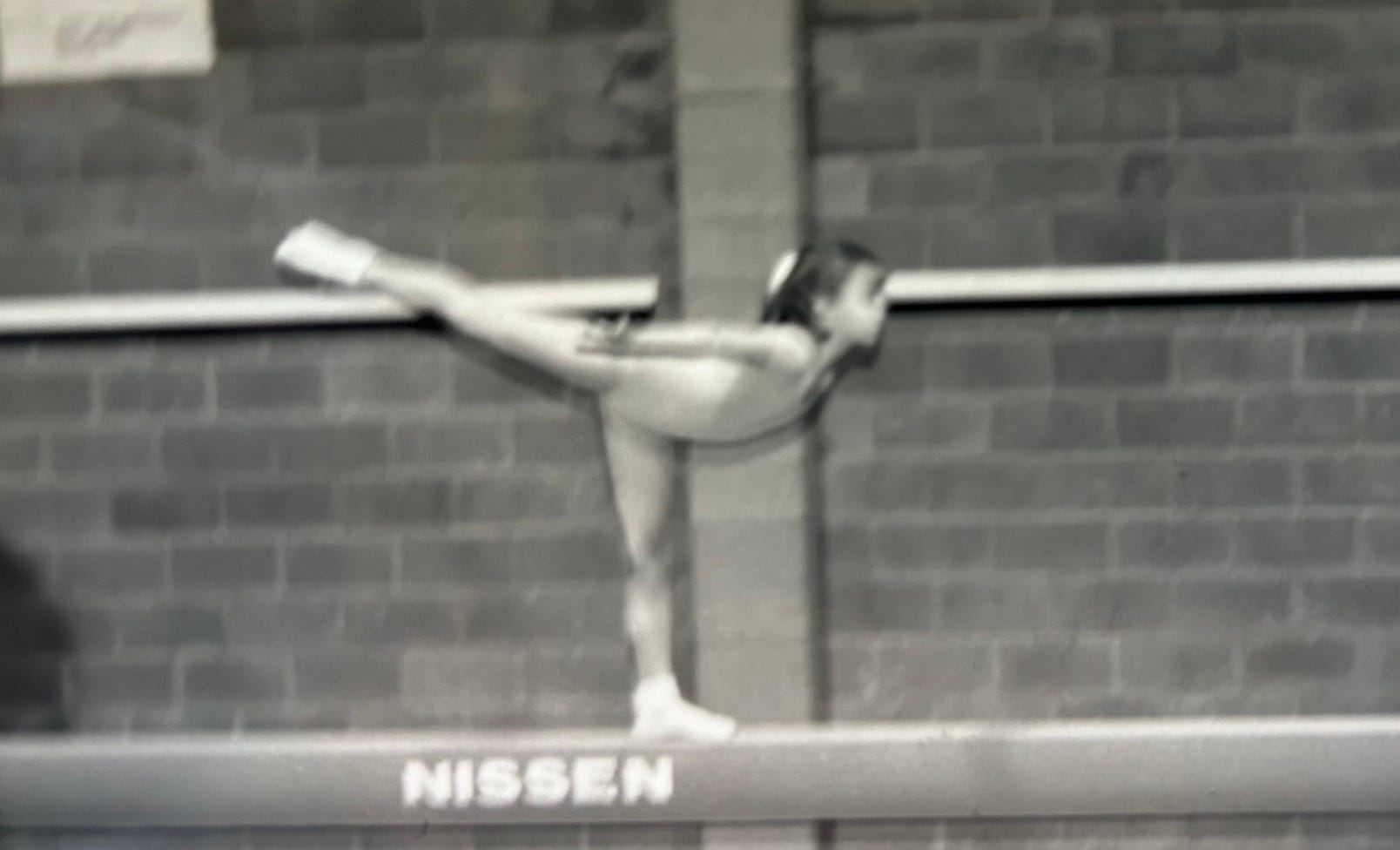
Sports was just something I always did, studied, worked hard at - gymnastics, softball, basketball, football, swimming, golf, tennis … I was lucky to have parents who were open to letting us try different sports. It was a refuge for me as a child, then adolescent, then teenager who was repeatedly teased or bullied for her size. If I could hurl a softball, spiral a football, swish a jump shot, nail a back tuck, perhaps no one would notice that I was usually the smallest person in nearly every room I entered. Sports have been empowering.
I have to admit I worry about other young girls. By 14, girls drop out of sports at twice the rate of boys. Only 36 percent of girls play sports compared to 46 percent of boys, according to the Women’s Sports Foundation. Some of this might be inevitable with the onset of puberty and different interests. However, I worry that girls will encounter coaches who are more negative than positive at a time when they are already self critical. I have coached girls and boys from kindergarten through 8th grade over the years and what I have observed about girls is that they need more encouragement than critiques because they are already the hardest one on themselves. They get signals from everywhere on what they *should* be doing. We are going to hear and read in upcoming months about how LGBTQIA+ groups are trying to infringe on women’s sports. But these aren’t the groups treating women unfairly. You only have to look at subtle slights and misogynistic policies in government and religious institutions to see who the ones are oppressing women.
There is hope though. Women’s sports on television are setting records, even internationally. It was hard to find a KC Current, women’s professional soccer, jersey because they were sold out before the league championship. New media like The Gist are providing more sports content for women, by women with more emphasis on women’s athletics.
As long as girls are scrambling for loose basketballs and stealing passes I’ve got to believe that there’s a shot at progress.
Warmly,
Traci
When I was at CMSU we had pimento cheese sandwiches while the men ate steak. Was it two years ago when they showed the discrepancies between the women’s and men’s meals and weight room? We’ve come a long way but still have to fight for equality. Great job as usual Traci.